Panels That Maintain Rated Output Levels
Solar Panel Cleaning in Clarence for systems experiencing reduced efficiency from pollen, dust, and environmental debris
Western New York properties with solar installations accumulate significant pollen during spring months, along with dust, bird droppings, and tree sap that block sunlight from reaching photovoltaic cells. Clearview Solutions provides solar panel cleaning in Clarence using techniques designed specifically for the delicate surface of solar arrays, which can be scratched or damaged by incorrect cleaning methods. A thin layer of pollen that appears barely visible to the eye can reduce panel output by 15 to 25 percent, and bird droppings create concentrated shadows that affect entire sections of interconnected cells.
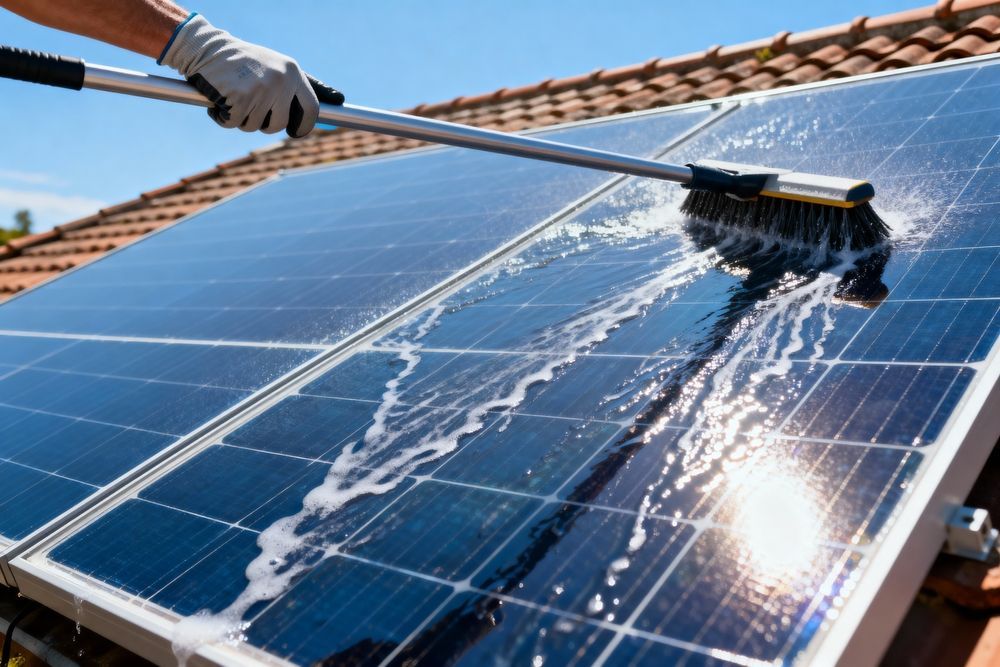
The cleaning process involves soft washing with deionized water and minimal pressure to avoid damaging the anti-reflective coating on panel glass or stressing the seals around individual cells. Standard tap water leaves mineral deposits that create new light-blocking spots, which is why professional cleaning uses purified water that dries without residue. Accessing roof-mounted panels safely requires proper equipment and awareness of electrical connections that must remain dry during the process.
Request a system evaluation to determine how much debris has accumulated and what cleaning frequency makes sense for your property's exposure to pollen and tree coverage.
Why Solar Systems Need Specialized Cleaning
Solar panel surfaces are engineered with coatings that maximize light transmission, and abrasive cleaning methods or harsh chemicals compromise those coatings permanently, reducing long-term efficiency even after the immediate debris is removed. Professional cleaning uses pH-neutral solutions and soft brushes or water-fed poles that remove contaminants without creating micro-scratches. The goal is returning panels to their original light transmission capacity without introducing new defects that accumulate dirt faster or scatter incoming sunlight.
After cleaning, your monitoring system will show output levels return to manufacturer specifications for current weather conditions, meaning the system generates the kilowatt-hours it was designed to produce rather than operating below capacity. The difference is measurable in monthly production data, particularly during high-output summer months when even small efficiency losses translate to significant energy reductions over time.
Routine maintenance typically involves annual or semi-annual cleaning depending on tree proximity and local pollen levels, with spring cleaning addressing pollen accumulation and fall cleaning removing leaf debris and summer dust. The service does not include electrical work or panel repairs, but cleaning does provide an opportunity to visually inspect for physical damage, loose mounting hardware, or seal deterioration that may need attention from your solar installer.
Questions About Maintaining Solar Panel Performance
Property owners in Clarence want to understand how cleaning affects system performance and what precautions protect their investment in solar energy.
What contaminants affect solar panels most in this region?
Spring pollen from oak and maple trees creates the heaviest seasonal coating, while bird droppings cause disproportionate output loss because they block light to interconnected cells that reduce output across entire panel strings.
How is solar panel cleaning different from window cleaning?
Solar panels require deionized water to prevent mineral deposits, softer brushes to protect anti-reflective coatings, and awareness of electrical components that cannot be exposed to water intrusion during the cleaning process.
When should panels be cleaned to maximize annual output?
Cleaning in late spring after pollen season and again in early fall before snow season ensures panels operate at full capacity during the highest production months of the year.
How much can dirty panels reduce system efficiency?
Depending on debris type and coverage, output losses range from 10 percent with light dust to 35 percent or more when bird droppings or heavy pollen cover significant portions of the array.
Can rain clean solar panels adequately?
Rain removes loose dust but does not eliminate pollen, bird droppings, or sap, and it often leaves mineral deposits from dissolved atmospheric particles that create new light-blocking films as water evaporates.
Clearview Solutions handles solar panel cleaning for residential and commercial installations throughout western New York, ensuring careful handling of sensitive panel surfaces and proper safety protocols for roof access. Call (585) 622-0077 for a free estimate based on your system size and accessibility.